Heating your home has become vital in the recent bouts of
extremely cold weather...
We as a nation are used to central heating in order to make every
room in the house warm. Where as many years ago you would simply have
an open fire in the heart of the home to heat everywhere. Saying this
there will always be something highly desirable about a real fire and
that warm home sweet home feeling. The psychological
effect is that – they make us feel warmer just by looking at them!
Installing a Balanced Flue Gas Fire enables you to achieve this
without breaking the bank. Balanced Flue Gas Fires are excellent on
efficiency, low on fuel consumption, clean burning and dust free
unlike traditional open fires.
Monday, 14 October 2013


Friday, 20 September 2013
Faber Fires
A Warm Welcome To your Home With A Faber Fireplace!
There's nothing more relaxing than sitting in front of a fire on a cold winters day, gazing into the flickering flames and spending time with family. Faber fireplaces offer style, dependability, quality and affordability. With so many options available to you along with the stunning look of the fireplace in your living room, dining room, or sitting room we recommend FaberFires.
If you are looking for a truly elegant focal point to your room that is stylish and in keeping with the character of your home, then you should consider a Faber Fireplace. With so many design choices, integration options and fuel types you are bound to find something suited to your needs. Weather a Gas Stove or a see-through built-in glass fireplace in an interior wall the heat output generated by Faber Fires adds warmth to your home.
Faber was established in the Nederland’s back in 1844. Faber have been developing and utilising the latest technology and advancing over many years, this is showcased in every range.
For expert advice on purchasing Faber fires and installation services please contact Grate Expectations Fireplace Specialists.
There's nothing more relaxing than sitting in front of a fire on a cold winters day, gazing into the flickering flames and spending time with family. Faber fireplaces offer style, dependability, quality and affordability. With so many options available to you along with the stunning look of the fireplace in your living room, dining room, or sitting room we recommend FaberFires.

If you are looking for a truly elegant focal point to your room that is stylish and in keeping with the character of your home, then you should consider a Faber Fireplace. With so many design choices, integration options and fuel types you are bound to find something suited to your needs. Weather a Gas Stove or a see-through built-in glass fireplace in an interior wall the heat output generated by Faber Fires adds warmth to your home.
Faber was established in the Nederland’s back in 1844. Faber have been developing and utilising the latest technology and advancing over many years, this is showcased in every range.
For expert advice on purchasing Faber fires and installation services please contact Grate Expectations Fireplace Specialists.
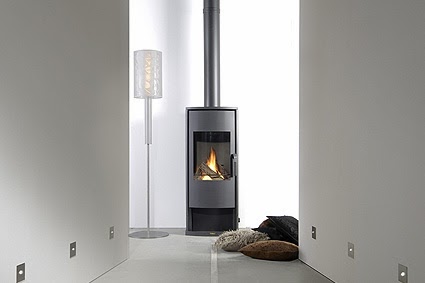
Warm Up This Winter with a DRU Fire
Designed to be different DRU Fires
exude ambiance, style and functionality. Established in 1754 DRU have
been designing bath tubs, kitchen accessories and heating aids with
great success. DRU are an environmentally aware organisation
supporting projects such as replanting trees in the Ugandan Rain
Forest and working to reduce the carbon footprint.

Each DRU Fire or Stove has been
designed to not only function as a heat source but to enhance any
room within the home. The DRU Fires team consists of three product
designers who work alongside the technical team to develop a product
that meets customer needs and requirements.
When
deciding on DRU fires, it is important to keep in mind certain
parameters:
- Firstly, most living rooms require a low-wattage stove: 3 to 4 kilowatts of power are usually enough, and any more than this could result in an uncomfortably warm space. If this is the case, many will run their stove for only short periods - with a wood-burning stove, this means that there will be poor combustion and high emissions. Gas stoves will not have these issues, but running a gas stove at a low temperature means missing out on the atmospheric flames.
- Next, decide what type of fuel will be needed. Gas fires are easy to use and cleaner, and can be controlled simply by the flick of a switch. They are also incredibly easy to install and can be placed almost anywhere - free standing or in a hole in the wall. On the other hand, there is a much greater atmosphere from a wood-burning stove: the smell of burning wood, the crackle of the flames. Wood combustion stoves have become far more efficient and sustainable in recent years. Finally, there is an electric alternative which is ideal for those not wanting gas or wood-burning stoves. DRU electric stoves use LED technology which uses a great deal less electricity than traditional electric stoves.Visit Grate Expectations Fireplace Specialists, The no.1 DRU Fires suppliers for the UK.
Tuesday, 21 May 2013
Poujoulat Products
Introduction:
Enamel
Premium
is the innovative evolution of the vitreous connecting flue pipe
using modern engineering design principles, combined with «state of
the art» manufacturing process. This provides the optimum solution
for connecting flue pipes.
Enamel
Premium
range is seam-welded with a high quality enamel coating, with
a minimum
of two
coats.
Without the socket, it provides the
best
aesthetic appearance.
The
unique male/female spigot connection requires «
no fixings and no fire-cement/sealant »
and makes it possible to rotate elements 360° whilst maintaining a
secure, quick
and easy installation.
It is
available in 5 diameters (Ø100, Ø130, Ø150, Ø180 & Ø200) and
can be supplied in 5 colours (Matt Black, Matt Grey, Gloss White,
Gloss Brown and Gloss Black. It can also be over-painted with a high
temperature stove paint to match the colour of your heating
appliance.
To
complement this range, you can order and install a Ventilated
Cover Pipe.
This allows a reduced
clearance from combustible material of only one diameter away
from the pipe.
All
of the products offered by Cheminées Poujoulat have been rigorously
tested in every configuration by the CERIC
Laboratory
to
ensure they meet highest standards (Building
Regulation Document J).
CE
marking:
0407-CPD-007
Designation:
T600
N1 D Vm L80050 G(xx)
Note:
G(xx) = 3 x diameter of pipe declared
Benefits
- Wide range of accessories i.e. Lengths, Elbows, Tees, Cleaning access components
- A pleasing, quality, aesthetic appearance.
- No need for fire-cement or fixings.
- Very high resistance to scratching.
- Very high resistance to high temperature, acid & tar.
- Quick and easy to install.
- Exceptional value
Technical
data
Max.
Temperature limitation: 600°C
Male/female
spigot:
Each component is constructed with a push fit “GASTOP®” Spigot
joint tested N1. The female end can be
easily cut
to provide the exact length you require with no additional components
needed.
Introduction:
Tubinox
Starflex
is a double
skin, smooth bore stainless steel flexible multi-fuel flue liner
designed for use with all solid fuel, wood, coal, gas, oil and pellet
heating appliances. This range is perfect for the renovation of
existing masonry chimneys with offsets. It is ideally suited for
operating temperature up to 450°C and comes with a 10
year Axa backed guarantee.
In grade
316L (Starflex
2012) or
904L (Starflex
HR 2010) our
Tubinox
Starflex
is extremely
robust and strong to
minimise problems on site whist passing it down an existing masonry
chimney. It can
be supplied in 3
different packaging methods:
Cut lengths, Ecofilm coils and de-coiling box.
All
of the products offered by Cheminées Poujoulat have been rigorously
tested in every configuration by the CERIC
Laboratory
to
ensure they meet highest standards (Building
Regulation Document J).
CE
marking:
0071-CPD-22012
Designation
for 316L Starflex
2012
T450
N1 W Vm L50012 G
Designation
for 904L Starflex
HR 2010
T450
N1 W Vm L70010 G
Benefits
- Wide range of accessories i.e. Cowls, Register Plate, Adjustable Elbows, brackets & supports
- Incredibly strong an extremely flexible
- Quick and easy to install with no mess
- Low resistance to flow
- High resistance to corrosion
- Easily meets regulation requirements
Introduction:
Therminox
is a high
quality, multi-fuel, stainless steel twin wall system chimney
designed for use with all solid fuel, wood, coal, gas, oil and pellet
heating appliances. It is ideally suited for operating temperature up
to 450°C and comes with a 10
year Axa backed guarantee.
All
of the products offered by Cheminées Poujoulat have been rigorously
tested in every configuration by the CERIC
Laboratory
to
ensure they meet highest standards (Building
Regulation Document J).
The
Therminox system chimney is available as TI
with a bright stainless steel outer case, and ZI
offering better value for internal use. Also, it can be powder
painted to any RAL colour of your choice or can be ordered with a
copper outer case.
It
comes with a wide range engineers components making the installation
of the chimney even much easier than usual.
With
Joint Seals, Therminox can also be used under positive pressure when
connected to a condensing boiler.
CE
marking:
0071-CPD-0011
Designation:
T450
N1 W V2 L50040 G50
T250
N1 W V2 L500040 O20
T200
P1 W V2 L50040 020 (with Joint Seals)
Benefits
- Wide range of accessories i.e. Lengths, Elbows, Tees, brackets & supports
- Solid fire-stop plate at ceiling level tested and approved
- Recessed locking band.
- Aesthetically pleasing look.
- Quick and easy to install.
- Customer satisfaction.
- Easily meets regulation requirements.
Technical
data
Max.
Temperature limitation:
- Soot
fire tested at 1000°C
-
Operating
temperature 450°C
- 4
hours fire rated to BS 476-20
Insulation:
High pressure injected mineral wool 30mm thick.
Supports:
- Lateral (wall bracket) every 4 metres.
- Deadweight (wall support) every 16 metres.
- Freestanding up to 3 metres above last support with Reinforced Locking Bands (2 metres as standard)For further information regarding Poujoulat Chimney Solutions visit the fireplace specialists.
Poujoulat Chimney Solutions
A
COMPLETE CHIMNEY SOLUTION FOR ALL APPLICATIONS & FUELS
Established
in 1950, The Poujoulat is Europe’s number 1 in metal chimney
systems.
POUJOULAT
has an immense wealth of knowledge of chimneys and the requirements
of the appliances they serve, covering diameters from 50mm to 3m,
suitable for industrial, commercial and domestic markets.
The UK
Head Office based in Guildford, Surrey was purchased by Group in 2006
to support the expansion requirements in the UK. From the UK Office
you can request stock availability and have full quotations plus
technical sizing produced for you, as well as a total design and
turnkey project management service from conception to completion.
Within
the Guildford Centre is a fully equipped training school, providing
Poujoulat and HETAS competency courses.
Mechanical
Heating and Ventilating contractors, OEM’s, Builders and Plumbing
Merchants, Stove and Fire retailers, Chimney and flue distributors
and installers, Consultants, Plumbing and Heating contractors and
Building contractors, POUJOULAT provides a Total Chimney and flue
solution for all applications and fuels.
For further information visit our Poujoulat Chimney Solutions
Friday, 17 May 2013
Gas vs. Electric vs. Wood-burning Fireplaces
Whether you’re looking for a way to heat your home, or just want a little romantic ambience in the evenings, a fireplace can be a fun way to achieve both. Which is the best type of fireplace though? Wood-burning? Gas? Electric? Something else?



Wood-burning Fireplaces
Wood-burning
fireplaces come with many homes, and you may already have one. The
downside to wood fireplaces is that you have to buy or cut your own
wood, store it somewhere dry so it can season, lug it in the house
whenever you want to build a fire, and worry about stray sparks and
other fire safety issues (such as not being able to leave the house
while there are still embers glowing).
For
all these reasons, many people who have traditional wood fireplaces
don’t use them that often. In addition, a wood fireplace isn’t a
very good way to heat a home. Much of the heat goes up the chimney,
and drafts will come down even when the fireplace is not in use.
Fireplaces that burn wood are also messy, and you’ll have to vacuum
ashes often.
On
the plus side, a crackling wood fire can be fun, especially in power
outages. It’s also nice to snuggle up to when you want a romantic
evening at home.
So,
who should consider a wood fireplace? If you don’t plan on building
fires very often and aren’t worried about heating the house
effectively, you can stick with a wood-burning fireplace. Also, if
you’re in love with “real” fires—you know, the snap, crackle,
and pop of actual wood going up in smoke—then a substitute fuel
just won’t work.
Gas Fireplaces
Gas
fireplaces (which include gas inserts, gas log sets, and
self-contained vent-free units that don’t require chimneys) are
growing in popularity. Though they lack the reality of a true fire
(sorry, no snap, crackle, and pop here), they can put out a pretty
convincing flame. Their convenience also makes them a winner for
many.
With
gas fireplaces, all you have to do is flick a switch to turn them on.
Upper end models even come with remote controls so you don’t have
to get off the couch. Maintenance is minimal compared to all the work
associated with wood-burning fires. Gas fireplaces are even good for
area heating—that’s where you just heat the room or living area
where you’re spending most of your time instead of turning on the
home’s central heat and wasting money heating the whole house. Gas
fireplaces can also work when the power goes out, so they are a nice
backup way to heat the home during a storm or other emergency that
leaves you without electricity.
Anyone
who wants the warmth and ambience of flickering flames without the
hassle of buying wood and cleaning ashes should consider a gas
fireplace. Prices usually run about £1,500 for unit and
installation, though you can find some deals and get them cheaper
from time to time.
Electric Fireplaces
Lastly,
let’s look at electric fireplaces. They are a cheaper alternative
to buying a gas insert or self-contained gas fireplace, and they are
much cheaper than having a whole chimney and wood-burning fireplace
installed. You do make quite a few sacrifices for that lower cost
though.
Electric
fireplaces are known for looking even “faker” than gas fires.
There aren’t any actual flames, just digitalised versions that
mimic fires.
Since
electric fireplaces run on electricity, they won’t work during a
power outage. They do put out some heat, but it is not the most
efficient. They’re about on par with space heaters. Indeed many
people have called them glorified room heaters.
On
the plus side, electric fireplaces don’t require any sort of
installation. They just come with a plug that you stick in an outlet,
and voilà: your fireplace is working. They can be a nice choice for
people in condos or apartments, where you can’t make drastic
changes to the walls (such as building a fireplace in your living
room). Also, their easy portability means you can move them from room
to room.
As
you can see, gas, electric, and wood-burning fireplaces all have
their advantages and disadvantages. Hopefully this article has helped
you decide which is best for you.
Visit Grate Expectations the Fireplace Specialists.
Fireplace Maintenance
Summer has come and gone, and Christmas is just around the corner. Have you checked your fireplace?
Home
owners are starting to order pales of wood, and getting their
fireplaces ready for a fire. Some owners are even checking chimneys
for bird nests.
A
beautifully lit fire in the fireplace can add so much warmth to your
living area. But in order to have a safe fire, chimney maintenance is
important.
At
least once a year, you should have your chimney checked and cleaned
if necessary, by a chimney professional. If you heat with wood, or if
special circumstances of your chimney system warrant it, it may be
wise to have the chimney checked more frequently.
“The
best time to have your chimney checked is every year before the
burning season,” says Chris Sparks, sales manager of The Mad
Hatter, a chimney cleaning company.
Although
we are well into the burning season, if you haven’t maintained your
chimney, it’s a good idea not to wait. A chimney fire can easily
destroy a house.
Chimney
fires are serious. A hot, destructive chimney fire sounds like a
freight train running through the house, and it’s not uncommon to
see 30-foot flames shooting from the chimney top. If there is a
chimney fire, get everyone out of the house and call the fire
department.
You
can avoid a chimney fire by learning to operate your fireplace
correctly, and routinely cleaning your chimney. Many times what
causes the fire is creosote. Creosote deposits are created from
unburned, flammable tar vapours from wood smoke. They are often
sticky or hard, and difficult to remove from chimneys. Long, slow
burns, or the use of green or wet wood can create these dangerous
creosote deposits.
Fire
building seems simple, but it’s not like lighting a camp fire or
firing up the barbecue. Even the most skilled pyrotechnic wizard runs
the risk of a major flop by trying to light a fire in a fireplace
without knowing about the appliances and the correct way to use them.
A
good fire requires not only a functional appliance, but also a good
fuel. For the best results, use seasoned firewood – wood that has
been stored covered for the better part of a year. Season your wood
under cover, but with good airflow.
Unseasoned
or green wood has too high a moisture content, and doesn’t burn
well. Hard-woods, like oak, tend to be better than softwoods, like
pine, since hard-woods have a BTU content, and will give a longer
burn time and better performance. (A BTU is a “British Thermal
Unit,” the amount of heat required to raise the temperature of one
pound of water one degree Fahrenheit).
Believe
it or not, super-dry wood – like that pile that’s been out in the
shed for decades – isn’t good firewood. This type of wood will
burn fast and furious, and it might throw a lot of sparks.
Do
not burn anything other than seasoned firewood. Burning treated
lumber, painted wood, trash, and such, releases toxic chemicals into
the atmosphere (including your home). So recycle your pizza boxes and
plastic wrap, and do yourself and our environment a favour.
Newspaper
is great for starting a fire, but it’s not a replacement for
firewood. Use just enough to start the fire, and recycle the rest.
Don’t use sections with colour print, as it contains chemicals that
are unsafe to burn. Use the plain, black-and-white parts.
Now
put down a layer of crumpled newspapers, snug, but not crammed
tightly together. You want space for air to get in, or you’ll have
a smouldering pile of papers. Put the papers under the grate.
Next,
put down a couple of handfuls of small, dry kindling: twigs and small
branches are fine, or small splits of wood. Criss-cross them in a few
layers, to allow air circulation. Don’t be stingy with the
kindling. It’s the key to a one-start fire. Then add a few larger
splits, and top it off with a couple of small logs. That’s it. Your
fire is ready. Before striking the match make sure your damper is
open. You may also need to preheat the flue.
The
purpose of a fireplace is to provide warmth, comfort and atmosphere.
Knowing how to take care of your fireplace can bring you these
desired effects, instead of those undesirables, such smoke, foul
odours and house fires. It’s all part of taking care of your home.
For further information on Fireplace Maintenance visit the fireplace specialists.
Subscribe to:
Posts (Atom)